The Best Wealth Advisors of the Next Decade May Ask Better Questions, Not Give Faster Answers
Clients rarely pay for information. They pay for confidence when the future is uncertain.
The Best Wealth Advisors of the Next Decade May Ask Better Questions, Not Give Faster Answers
Rajesh has been a wealth advisor for nearly twenty years.
The morning before an important client review rarely changes.
By eight o'clock he is already moving between half a dozen applications. The portfolio management system comes first. Then the CRM. Overnight market commentary. Research reports. Product updates. Previous meeting notes. Emails from analysts. Somewhere among hundreds of pages of information is the answer to a question his client has not yet asked.
By the time he walks into the meeting, nearly three hours have passed. The meeting itself lasts less than an hour.
Ask Rajesh what mattered most during those sixty minutes and he is unlikely to mention the reports he spent the morning reading.
He remembers a different part of the conversation.
The client had recently sold a family business and was uncertain whether to diversify immediately or wait. Their daughter was planning to study overseas. Retirement suddenly felt much closer than it had a year ago. Markets were volatile, interest rates were changing and every newspaper seemed to offer a different prediction.
For fifteen minutes, the conversation moved away from products and performance. It became a discussion about decisions.
Should we wait? Should we invest now? What risks are we not seeing? What would you do if this were your family?
Those fifteen minutes were why the client came. The reports merely helped them get there.
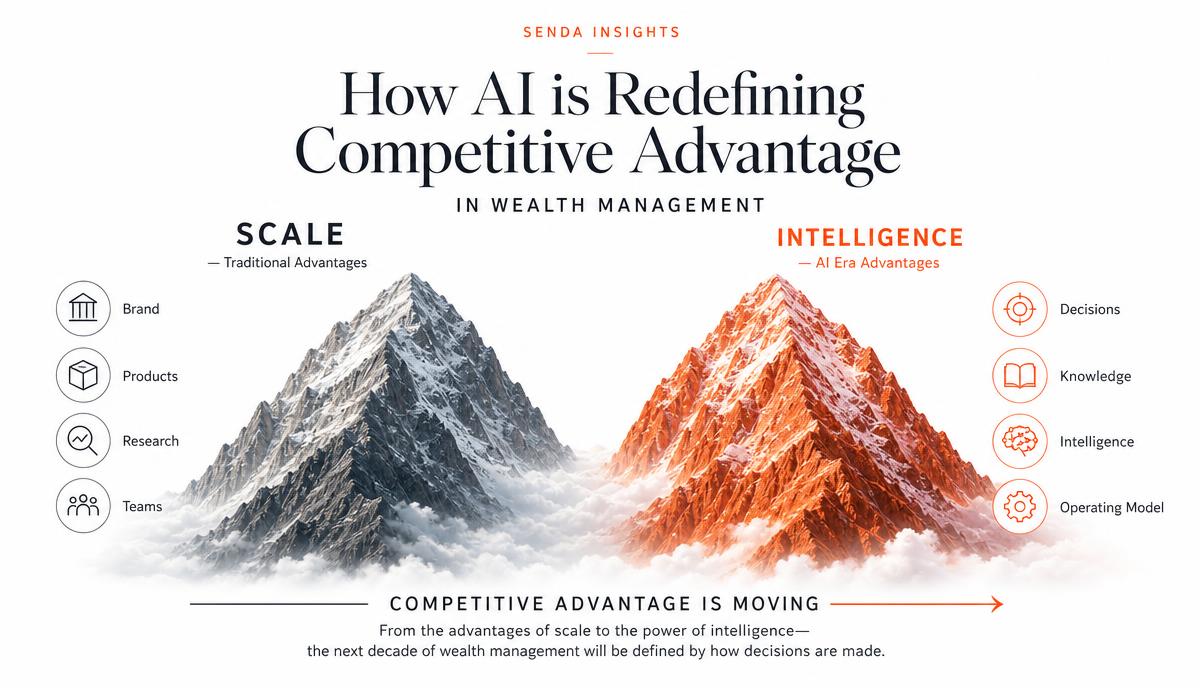
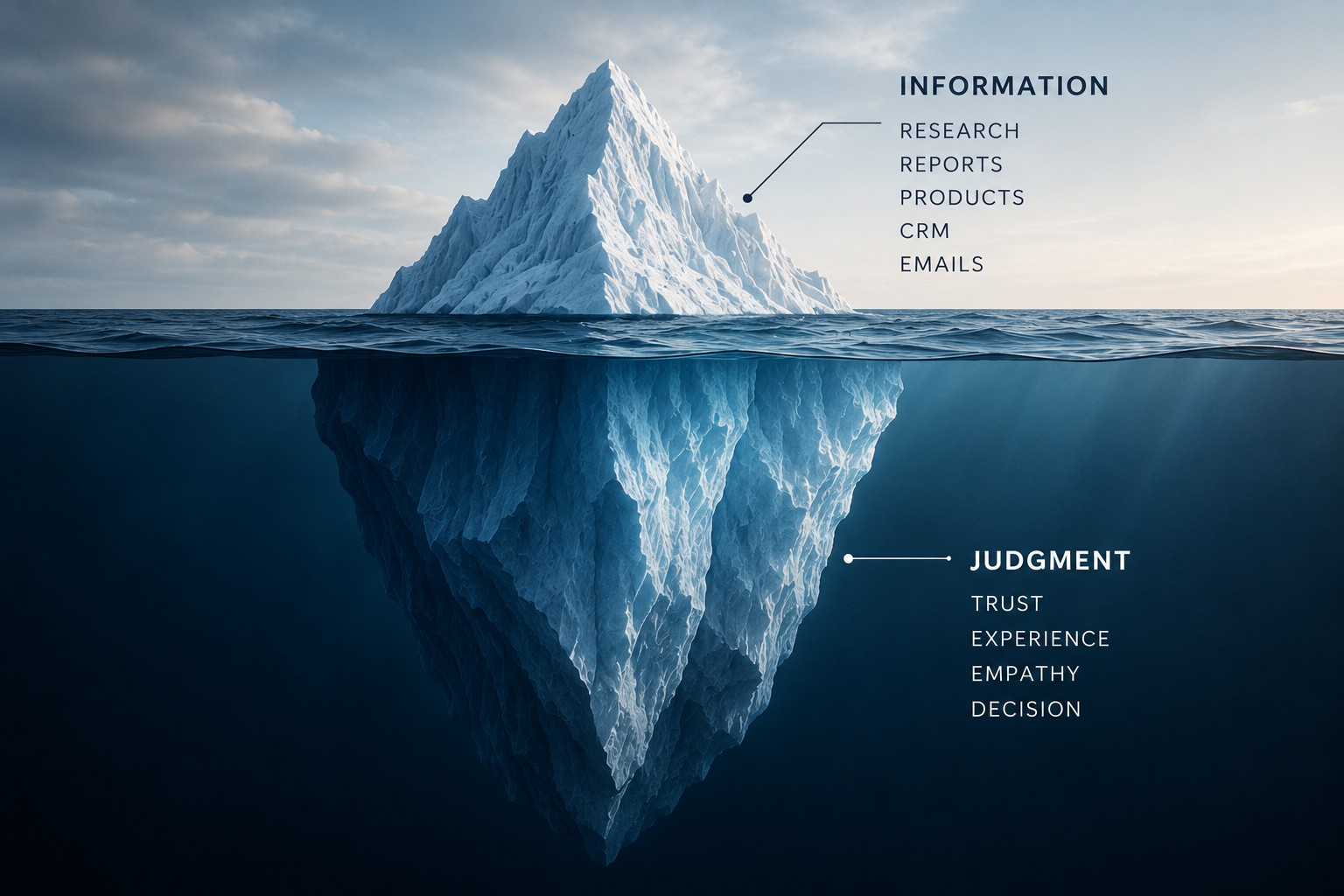
Spend a day inside almost any wealth management firm and it is easy to conclude that the business revolves around information.
Research arrives every morning. Markets are monitored continuously. Portfolios are reviewed. Analysts produce reports. Product specialists answer questions. Compliance validates recommendations. Information flows everywhere.
But watch carefully during a client meeting.
Information rarely changes a client's life. Decisions do.
The future of wealth management will not be defined by who has access to the most information. It will be defined by who helps clients make the best decisions when the future is uncertain.”
That distinction has always existed, although it is easy to overlook.
For decades, wealth advisors have quietly performed two very different jobs.
The first is gathering intelligence. Understanding markets. Reading research. Following regulations. Reviewing portfolios. Remembering previous conversations. Connecting information from dozens of systems and specialists.
The second is something entirely different. Helping another human being make an important decision when certainty does not exist.
These two responsibilities have traditionally lived together because they had to. Before an advisor could exercise judgment, they first had to spend hours assembling the knowledge required to reach that moment.
Perhaps that is why technology has often disappointed the profession.
Every generation promised to make advisors more productive. CRM systems organized client information. Portfolio management platforms automated calculations. Digital onboarding reduced paperwork. Research became searchable. Client reporting became automated.
Each innovation made preparation more efficient. Yet advisors somehow remained just as busy.
The reason may be surprisingly simple. Technology improved the work surrounding decisions. It rarely changed how decisions themselves were made.
Artificial intelligence may be the first technology capable of changing that equation.
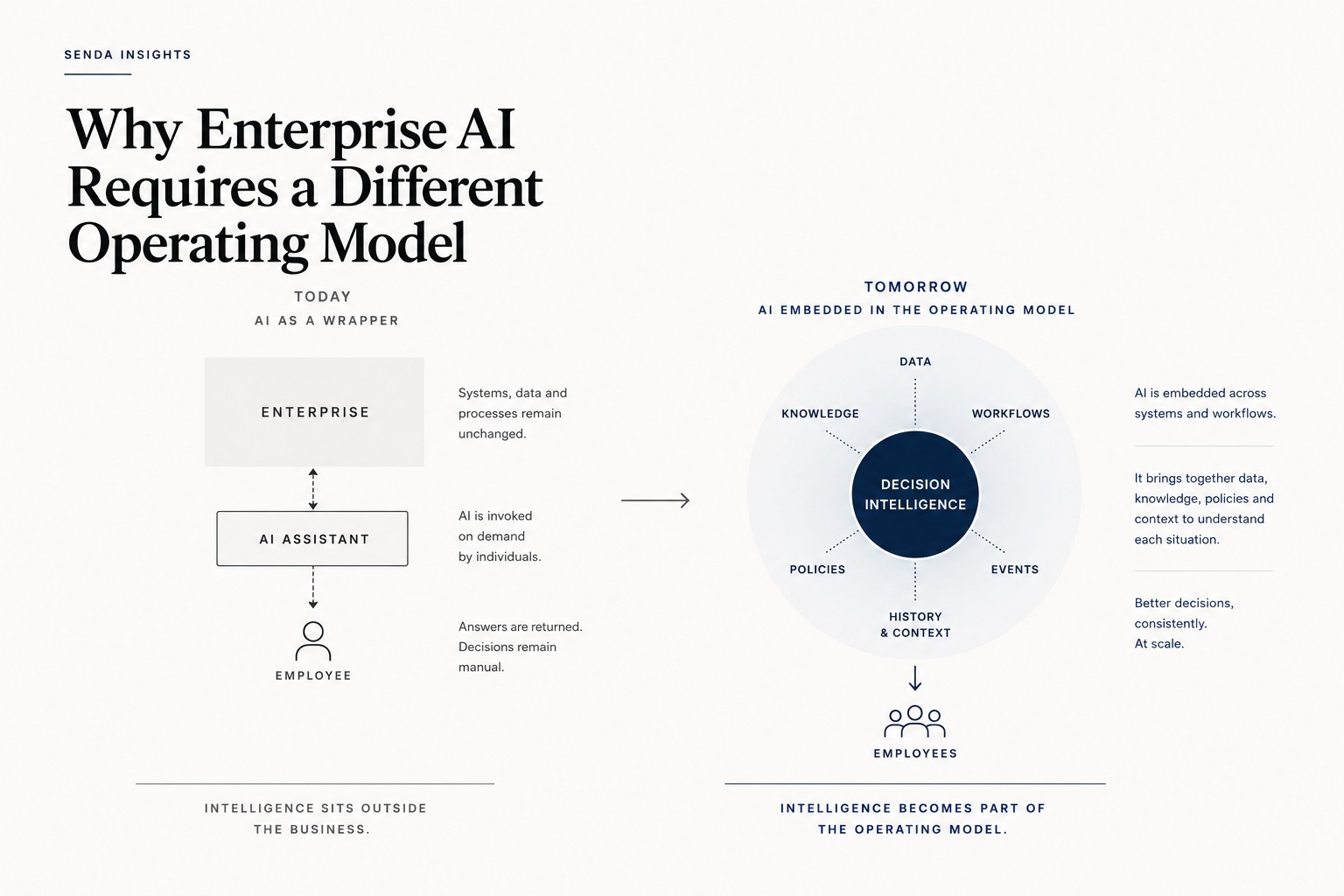
Much of today's discussion focuses on AI's ability to summarize documents, generate proposals, search research or draft emails. Those are useful capabilities. They save time. But they still assume that Rajesh begins every morning by collecting information before he can start thinking.
Imagine instead that he arrives at the office ten years from now. His first client meeting is in an hour. Before he opens a single application, the firm already understands what has changed.
The client's objectives remain the same, but market movements have altered the portfolio's risk profile. Interest rate changes have affected several fixed-income positions. Two investments now exceed the client's preferred allocation. A tax event next quarter creates an opportunity that did not exist last month. Similar situations across hundreds of previous client relationships have produced useful insights. Relevant research has already been connected to the portfolio. Regulatory constraints have already been evaluated.
Nothing has been decided. Nothing has been recommended. But everything that should inform the decision is already waiting.
Rajesh's first question is no longer, "Where do I find the information?" It becomes, "Given everything we know, what is the right thing to do?"
Artificial Intelligence changes the advisor's first question—from searching for information to exercising judgment. That shift may prove more valuable than any productivity gain AI can deliver.”
That may sound like a small difference. It is anything but.
The first question belongs to an information worker. The second belongs to a trusted advisor.
For the first time, those two roles may begin to separate. Information gathering increasingly becomes part of the enterprise itself. Judgment remains profoundly human.
This is why I believe the discussion around AI often misses the larger transformation taking place. The future of wealth management is not simply about advisors becoming more productive. It is about advisors spending more of their careers doing the work that clients actually value.
Clients rarely remember how quickly an advisor found a research report. They remember whether someone helped them navigate uncertainty. Whether trade-offs were explained honestly. Whether difficult conversations became clearer. Whether they left the meeting feeling more confident than when they arrived.
Trust has never been built through information alone. It has always been built through judgment.
Ironically, AI may elevate that judgment rather than diminish it. As enterprises become better at connecting markets, research, client context, institutional knowledge and previous decisions, advisors may spend less of their day acting as the integration layer between disconnected systems.
Instead, they become what they were always meant to be. Decision-makers.
The best wealth advisors of the next decade won't be remembered for giving faster answers. They'll be remembered for asking better questions, building deeper trust and giving clients the confidence to make life's most important decisions.”
This also changes how firms think about experience. Today, much of an experienced advisor's value comes from patterns accumulated over decades. They have seen markets rise and fall. They recognize familiar situations. They remember what worked before. They know which risks deserve attention and which headlines will disappear by next week.
Those instincts remain irreplaceable. What changes is that the firm's institutional knowledge no longer needs to remain trapped inside a handful of experienced professionals. It can increasingly become available across the enterprise, allowing younger advisors to benefit from decades of accumulated experience while enabling senior advisors to focus on what experience cannot be replaced by. Wisdom.
Perhaps this is the profession's most interesting future. Not wealth advisors who know more facts. Not wealth advisors who produce more reports. Not even wealth advisors supported by better technology. But wealth advisors who spend less time searching for answers and more time asking better questions.
Because in the end, clients rarely pay for information. They pay for confidence when the future is uncertain.
And helping people find that confidence has always been the real profession of wealth management.
Senda Editorial Team
Research & Insights